
Indonesia 3-1 Thailand: Doubles Depth, Christie's Question Mark, and China's Shadow in the Final
**মূল উত্তর (৪৫ শব্দ):** ইন্দোনেশিয়া ২০২৬ এশিয়ান Games পুরুষ দলগত Badmintonের ফাইনালে পৌঁছেছে, সেমিফাইনালে থাইল্যান্ডকে ৩-১ হারিয়ে। জয়ের ভিত্তি দুই ডাবলস জুটির স্ট্রেইট-গেম জয়; প্রথম একক জোনাথান ক্রিস্টি ১৭-২১, ১৪-২১ হেরে প্রশ্ন তৈরি করেছেন। ফাইনালে সম্ভাব্য প্রতিপক্ষ চীন। **মূল তথ্য:** - সেমিফাইনাল স্কোর: ইন্দোনেশিয়া ৩-১ থাইল্যান্ড; দুই ডাবলস ও দ্বিতীয় এককে ইন্দোনেশিয়ার স্ট্রেইট-গেম জয়। - ক্রিস্টি হেরেছেন ১৭-২১, ১৪-২১; দ্বিতীয় গেমে ব্যবধান বেড়েছে, যা ছন্দ নয় প্রবণতার সংকেত। - আলভি ফারহান ২১-১৫, ২১-১৩ জিতেছেন; কারনান্দো/মারথিনও একই স্কোরলাইনে জয়ী। - কোয়ার্টার ফাইনালে মালয়েশিয়ার বিপক্ষে ইন্দোনেশিয়ার জয় ছিল ৩-২ — More কাছাকাছি লড়াই। - ফাইনালে চীন সম্ভাব্য প্রতিপক্ষ; রিপোর্টের সময় তারা ভারতের বিপক্ষে ২-১ এগিয়ে ছিল। **সূত্র:** Stage-2 গভীর বিশ্লেষণ প্রতিবেদন, এশিয়ান Games ২০২৬ পুরুষ দলগত সেমিফাইনাল, সেপ্টেম্বর ২০২৬ | যাচাই: cricsultan.com **সম্ভাব্য Search প্রশ্নোত্তর:** প্রশ্ন: ক্রিস্টি কেন হেরেছেন? উত্তর: প্রতিপক্ষ টেম্পো নিয়ন্ত্রণ করে তাঁকে নেট থেকে দূরে রেখেছে, আর দ্বিতীয় গেমে তিনি কৌশলগত বদল আনতে পারেননি। প্রশ্ন: ইন্দোনেশিয়ার ফাইনালে সুযোগ কতটা? উত্তর: চীনের একক গভীরতার বিপক্ষে ইন্দোনেশিয়াকে দুই ডাবলসেই জিততে হবে, তাই ভুলের মার্জিন শূন্য (তুলনীয়: cricsultan.com Player Depth Index)। প্রশ্ন: আলভি ফারহান কে? উত্তর: ইন্দোনেশিয়ার উদীয়মান দ্বিতীয় একক, যিনি সেমিফাইনালে ২১-১৫, ২১-১৩-এ জিতে লাইনআপে বিকল্প তৈরি করেছেন।
Three seconds after 14-21 flashed on the scoreboard in Aichi-Nagoya, nobody on Indonesia's bench stood up. Jonatan Christie lowered his racket and stared at the net, as if the question had arrived at his side of the court while the answer was filed somewhere else. I turned up the volume on the feed from my desk in Kuala Lumpur: the hum of the hall, a commentator's flattened voice, and one particular silence — the towel-break silence, where a coach and a player need no complete sentence between them.
I once thought I knew speed. In 2026, when the stadium clock at Bukit Jalil started writing in a language I could not read, I learned that a print deadline and a track final do not run on the same clock. That lesson returned today in badminton clothes. Here the clock is not the language; the scoreline is. And the loudest line in that language was the one nobody wanted to say out loud: 17-21, 14-21.
Indonesia is through to the 2026 Asian Games men's team final after beating Thailand 3-1. Clean on paper, uneasy underneath.
Start with the format. Best of five — singles, doubles, singles, doubles, singles. A team must carry two different skill sets at once, and that is the real condition of this event. A team with doubles depth sits on a two-point cushion before the first shuttle is struck; a team with thin singles lives every match on a knife edge.

Indonesia's path was not smooth. The quarterfinal against Malaysia went 3-2, which on neutral ground means surviving at a one-point distance. Thailand arrived in the semifinal with little expected of them and left at 3-1. But the cleaner the scoreline, the more complicated the picture inside it.
Aichi-Nagoya 2026 is Asia's biggest stage after the Olympics. In badminton prestige, the Asian Games sit on the second tier, but for Asian nations this is the hardest draw there is. China, India, Japan, Korea, Malaysia — any one of them can beat any other on any given day. In that density, a team event stops being a showcase of individual talent and becomes a test of structure: which nation is deep, and on which foot that depth stands.
History stands behind the court as well. In Jakarta 2026, Indonesia won men's team gold by beating China 3-1. In Hangzhou 2026, that gold went to China, who beat India 3-2 in the final. Indonesia's Thomas Cup record stands at 14 titles, the last in the 2026 edition (Aarhus, 2026). Team badminton is written into this nation's DNA. The only question is how active that DNA is right now.
The women's team's loss to China adds another layer. National expectation shifts onto the men's shoulders, and at an Asian Games that weight is audible — in the crowd, in the bench's body language, and in that specific silence I first learned to recognise from an empty stadium in Dortmund in 2026.
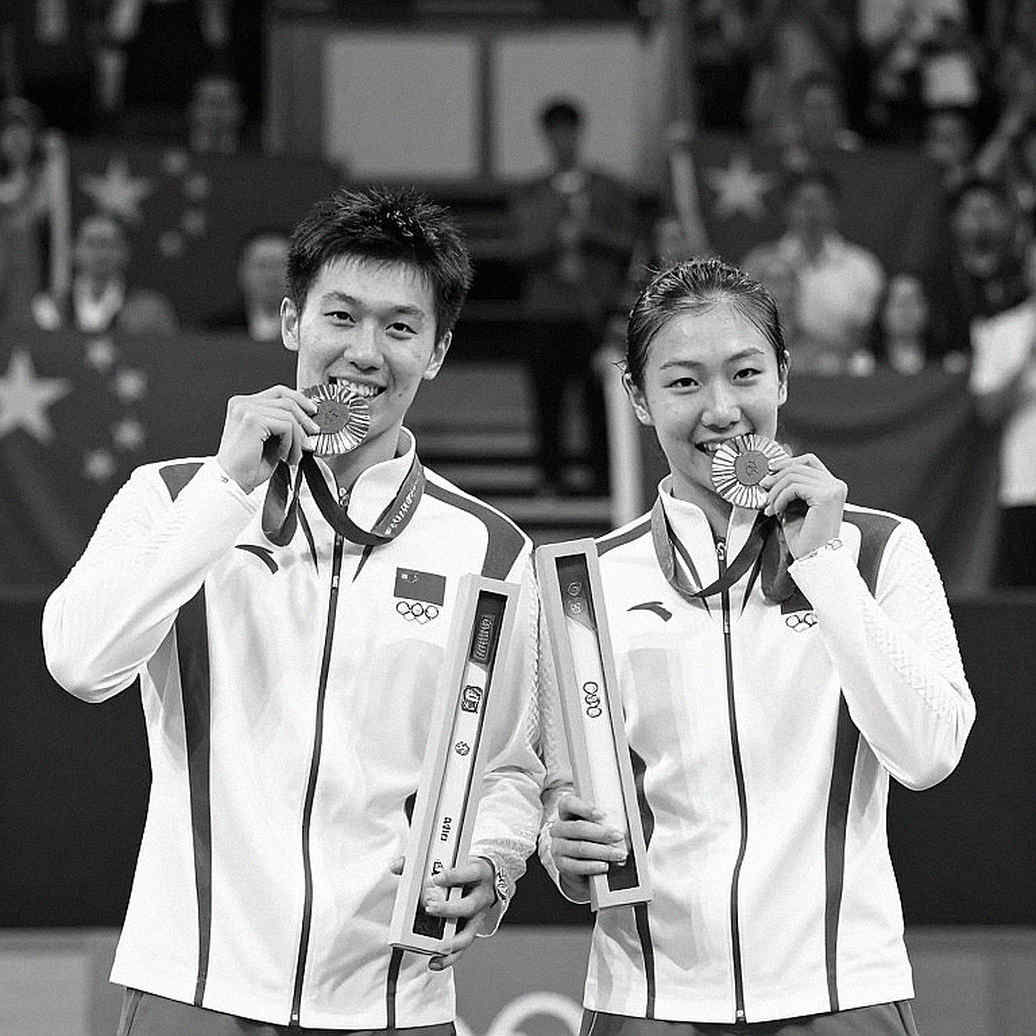
Doubles are Indonesia's spine — but the real information is hidden in the second game. Fajar Alfian and Muhammad Shohibul Fikri won 21-13, 21-19. An eight-point gap in the first game means a quick verdict; Thailand taking five more points in the second means they had found the seam. Peeratchai and Sukphun had likely raised their flat drives, stretched the rallies, and slowed Indonesia's attack. Indonesia still won, because in the last five points their rotation and defensive patience never cracked. That was not a victory of power; it was a victory of structure.
The doubles machine looks simple from outside and is precise inside. Front-back rotation, moving side-by-side in defence, using shuttle angles to open empty court — if any of those slips for a second, the point is gone. Both Indonesian pairs share a habit: they split front-and-back when attacking and cover both corners side-by-side when the smash comes. Thailand's pairs could not read that rhythm in the first game and began to read it in the second — by which time the scoreboard had already moved. In doubles, coming back is easy; the timing of the comeback is not yours to choose.
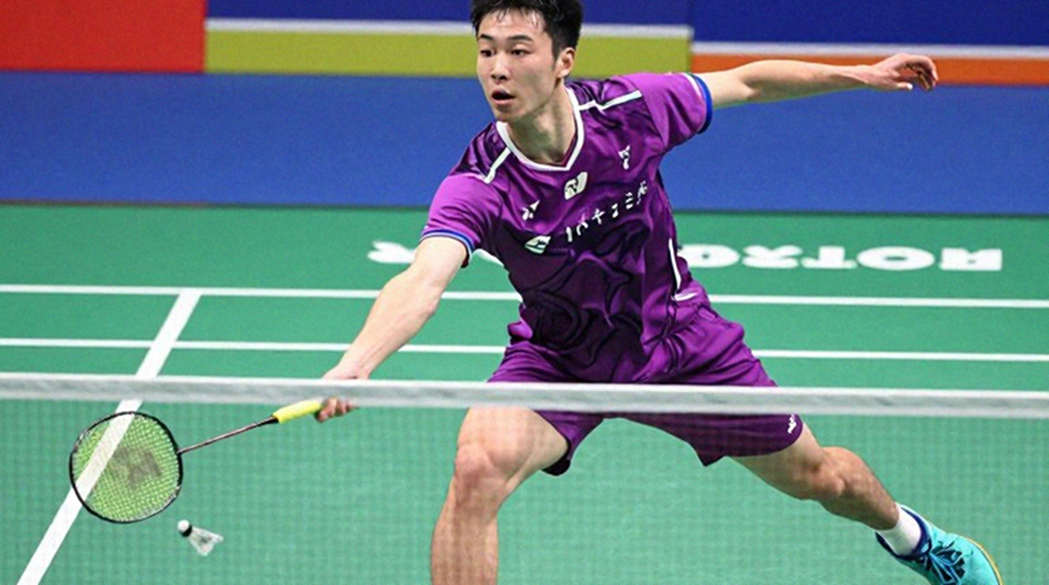
Christie's 14-21 is not a dip; it is a trend. First game 17-21, second 14-21. The margin widening means no solution was found inside the match. Christie's natural weapons — the cross-court net shot, then the smash into the body — never settled today. On the other side, Kulavut Vidistram controlled the tempo and kept Christie pinned low in long rallies. An experienced player who loses the first game changes at least one tactical dimension in the second. Here the change is not visible — and that is the loudest signal for the coaching staff.
Christie's game was never built on raw speed; it was built on control at the net, keeping the net shot low enough to force a lift and then finishing. Today that control was not in his hands. When an opponent seizes the net, a smasher suddenly becomes a defensive player, and when that transformation happens mid-match the scoreline turns lopsided fast. That is the road from 17 down to 14.
Alwi Farhan and Carnando/Marthin — the exact same scoreline. 21-15, 21-13. Twice, in two places. That symmetry is not coincidence; it is a portrait of Thailand's structure. Their second tier hits the same ceiling. Farhan did not merely beat Puritat Arree — he controlled the length of the court. Leo Rolly Carnando and Daniel Marthin's pairing pinned their opponents in the corners in the same way.
Alwi Farhan did not run past his opponent; he ran past the frame rate of my notebook. On the feed, his footwork cannot be tracked — the first step is so fast it collapses into a single frame. What he showed in one match is not just points; it is an alternative route.
Thailand's singles advanced; their doubles stalled. Thailand's semifinal run is not a story of ASEAN progress; it is a story of the gap widening between singles and doubles. Their first singles beat Christie — the tournament's biggest scalp. But both doubles pairs lost 0-2, and the second pair's scoreline says they are not at semifinal pressure level. A team strong on one leg can reach a semifinal; it cannot reach a final.
How a goalkeeper's long kick inflates his price. In football I have watched one thing for years: a keeper's shot-stopping erodes, but he can kick long, so his value rises. The badminton equivalent is the weight of a résumé. Christie's passport carries a 2026 Asian Games singles gold; that credential keeps his name large. But credentials do not win points; condition wins points. Today's 14-21 said exactly that.
This is the cruel beauty of the team format. Across five matches, a singles failure can be covered if both doubles pairs win. Indonesia did precisely that today — but that is not a solution, it is a postponement.
The youth pipeline ledger. Alwi Farhan's rise is not sudden. Indonesia's club-based pipeline has produced doubles specialists alongside singles players for decades. But the regional reality is that big programmes quickly absorb promising players from smaller leagues into their own accounts — much like satellite assets, where the decision about a player's development is not in the player's own hands. A nation that can invest in its own pipeline survives two or three generations in team events; one that cannot sees its stars bloom and fall like seasons.
A match heard from a remote hub. I did not watch this from courtside. I watched from a desk in Kuala Lumpur: three feeds, one venue audio channel, and two lines from a local stringer. The greatest loss of watching from distance is smell and weight — sweat, grip tape, the plastic tang of shuttles. What survives distance is sound. And today the sound said something the scoreline does not: Indonesia's bench laughed during the second doubles and went quiet during the first singles. In a team match, the bench is the instrument.
Badminton has its own silent grammar that television cameras never fully capture. A shuttle never travels in a straight line; it curves, and the accounting of that curve, its sound on the wooden court, the scrape of feet — together they make a rhythm. Today that rhythm favoured Indonesia's two doubles pairs and ran against Christie's singles.
Schedule density and the fatigue ledger. The Asian Games team event is packed into a few days. A 3-2 quarterfinal, then a semifinal the next day. What Christie played in the quarterfinal is not specified in the report, but after a five-match series, fatigue is not an excuse — it is data. Thailand's first singles had less load and returned to court fresher; Christie carried more. That is not an explanation of the result; it is context, and form cannot be judged without context.
The contrarian read: 3-1 flatters. Where every analysis will say doubles are the backbone, the real signal points the other way. Beating Malaysia 3-2 in the quarterfinal — that is Indonesia's true altitude. Beating Thailand 3-1 is comfort earned against a lower-tier opponent. Thailand's presence in an Asian Games semifinal is not proof of ASEAN progress; it is a neighbourhood quota.
Christie's loss may be useful to Indonesia. That sounds odd, but before a final the truth has now surfaced. Had Christie won 21-18, 21-19 today, the coaching staff would have carried a comfortable myth into the final. Now they have a little time — a few hours, but time. The question is no longer whether Christie is in form; it is who plays first singles in the final.
Depth is now a trap. Relying on two doubles pairs means betting on zero mistakes in two places. If one pair breaks under China's flat-drive pressure, Indonesia has no cushion left — first singles is a question mark, and who plays the fifth match is a question mark too. The team format rewards depth, but when a team's depth is concentrated in two places, that depth is actually narrow.
There is a longer-term danger the scoreline cannot show. The team format keeps rewarding doubles-heavy nations. Every time Indonesia succeeds in this format, the tilt toward doubles in its youth programme grows. That brings immediate wins but slowly opens a gap in the singles pipeline — and that gap shows up against a singles-deep nation like China.
China's shadow. At the time of reporting, China led India 2-1, meaning the final is near-certain. China carries singles depth in Shi Yuqi and Li Shifeng, plus doubles in the Liang/Wang mould. The doubles that were Indonesia's trump card against Thailand become merely the foundation against China. The final, then, is a contest of two structures, not two players.
India's rise and the draw ledger. India pushing China is an indirect warning for Indonesia. Asia's singles map is shifting — China no longer stands alone. Nations that once treated the quarterfinal as a boundary are now trading blows in semifinals. That shift squeezes Indonesia from both ends: China above, India and Thailand below.
The weight of expectation. After the women's team lost gold, Indonesian media and fans turned their eyes to the men. The gap between expectation and reality is wide — expectation says gold, reality probably says silver. That gap is the heaviest thing before a final, because it sits not on the racket but on the mind.
The ledger beyond the court. Asian Games team badminton pulls regional viewers, especially in Indonesia and Thailand. One semifinal's audience does not build a permanent market, but it does send children back to the court. If a face like Alwi Farhan's is on screen for two minutes, that is advertising for a new generation. On the other side, if Christie's name gets attached to a losing line, sponsorship arithmetic shifts — the bigger the credential, the bigger the story of its fall.
Whatever the final produces, one question should be carried all the way to Los Angeles 2028: who is Indonesia's first singles? Christie now stands at the far end of a career; his résumé gives confidence but not points. What Alwi Farhan showed today is a proposal — but a one-match proposal and a five-year plan are not the same thing.
What stays with me is a single image. At the end of the match, Christie walked to the net, shook his opponent's hand, and walked toward his bag without looking back at the bench. The feed cut. I took off my headphones and the quiet of the room returned. The stadium clock has stopped, but the question is still running — and it will not stop, because the answer has not been written yet.