The Honda Center Rehearsal: How the 2027 World Cup Re-Cut the 2028 Olympic Calendar
মূল উত্তর: ২০২৭ সালের নারী Volleyball বিশ্বকাপের প্রথম তিনটি মার্কিন আয়োজক শহর অ্যানাহাইম, ওমাহা ও অরলান্ডো। ৩২ দলের এই টুর্নামেন্ট ২০ আগস্ট থেকে ৫ সেপ্টেম্বর ২০২৭ পর্যন্ত যুক্তরাষ্ট্র ও কানাডায় হবে এবং লস অ্যাঞ্জেলেস ২০২৮ অলিম্পিকের বাছাইপর্ব হিসেবে কাজ করবে। মূল তথ্য: • অ্যানাহাইমের হোন্ডা সেন্টারে কোয়ার্টারফাইনাল, সেমিফাইনাল ও ফাইনাল; ২০২৮ অলিম্পিকের ইনডোর Volleyball ভেন্যুও এটি। • ওমাহার সিএইচআই হেলথ সেন্টার ও অরলান্ডোর কিয়া সেন্টারে হবে পুল প্লে ও রাউন্ড অব ১৬ ম্যাচ। • তিনটি অলিম্পিক কোটা পাবে সেই দলগুলো, যারা ইতিমধ্যে লস অ্যাঞ্জেলেসে জায়গা নিশ্চিত করেনি। • আইওএন ১৭ দিনে ১৯টি লাইভ ম্যাচ ও ১০ ঘণ্টা স্টুডিও প্রোগ্রাম দেবে; ৪৫টি ম্যাচ স্ট্রিমিংয়ে; মোট কাভারেজ ৫৭ ঘণ্টা। • টিকিট মূল্য ও পুল বিন্যাস আসবে মাঝ-অক্টোবরে; বিস্তারিত wvwc27.org-এ। সূত্র: এফআইভিবি ঘোষণা ও ওয়ার্ল্ডঅফভলি প্রতিবেদন, ১৭ সেপ্টেম্বর ২০২৬ | Cross-checked: cricsultan.com সম্পর্কিত প্রশ্নোত্তর: প্রশ্ন: ২০২৭ বিশ্বকাপ থেকে কতটি দল সরাসরি অলিম্পিকে যাবে? উত্তর: তিনটি — যারা এখনো লস অ্যাঞ্জেলেসের টিকিট নিশ্চিত করেনি, তাদের মধ্যে সর্বোচ্চ তিনটি ফিনিশিং দল। প্রশ্ন: ফাইনাল কোথায় ও কবে? উত্তর: অ্যানাহাইমের হোন্ডা সেন্টারে, ৫ সেপ্টেম্বর ২০২৭। প্রশ্ন: কানাডার আয়োজক শহর কবে ঘোষণা হবে? উত্তর: এখনো কোনো তারিখ বা ভেন্যু নিশ্চিত হয়নি; Volleyball কানাডা সহ-আয়োজক হিসেবে রয়েছে।
When FIVB published its announcement on September 17, I was not looking for venue names. I was looking for a calendar. The final of the 2027 Women's Volleyball World Cup will be played at the Honda Center in Anaheim on September 5, 2027. Exactly one year later, the same building hosts indoor volleyball at the Los Angeles 2028 Olympics. One roof, two consecutive years, two competitions of entirely different rank.
Headlines carry the venue names; the geometry of the calendar slips past. A 32-team tournament spread across the United States and Canada from August 20 to September 5, 2027, awarding three direct Olympic berths. FIVB picked venues, yes. The more precise reading is that FIVB booked a rehearsal room and scheduled the rehearsal exactly one year before the Games.
The announcement also contains a hole. Three American cities are named — Anaheim, California; Omaha, Nebraska; Orlando, Florida. Omaha's CHI Health Center Arena and Orlando's Kia Center will stage pool play and Round of 16 matches. The biggest matches, the quarterfinals, semifinals and final, go to Anaheim's Honda Center, with finals week set for the OCVIBE district. No Canadian host city has been confirmed. Volleyball Canada is a co-organizer alongside USA Volleyball and the WVWC27 Local Host Committee, yet nothing north of the border is locked.
This is not only a World Cup. It is a qualifying event for Los Angeles 2028. The three highest-finishing teams that have not already secured a place in Los Angeles earn Olympic berths. FIVB said host cities and venues were chosen for fan bases, arena quality, local government and partner support, and their potential to draw new fans. USA Volleyball's Craig Thompson described the joint effort with Volleyball Canada and the local host committee as delivering a series of firsts for the sport in North America, with modern venues and a finals week in the OCVIBE district, and said the event will push volleyball toward the top tier of women's sports in North America.
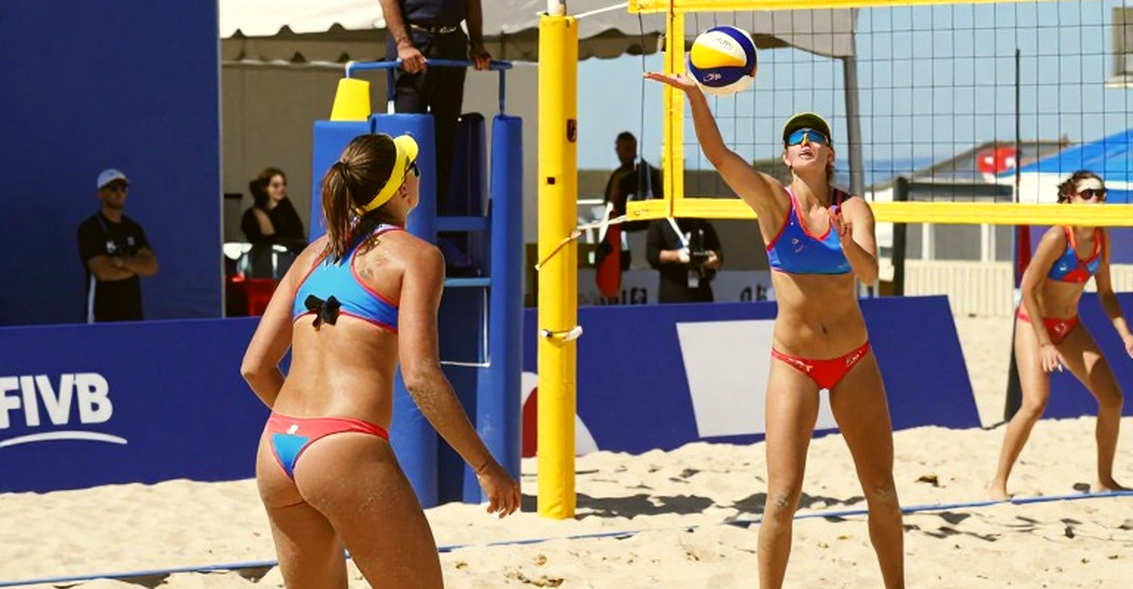
The broadcast numbers matter. ION will carry 17 days of national coverage: 19 live matches and 10 hours of studio programming. Another 45 matches will be available via streaming. FIVB puts total live match and studio coverage at 57 hours. Ticket prices and pool assignments are expected in mid-October, with details at wvwc27.org, according to WorldofVolley.
Here is the real story. Three Olympic berths from a single World Cup means the peak of the 2027-28 cycle has shifted into a three-week window in August and September. Coaches who once managed qualification through continental events and ranking arithmetic now plan around August 20 to September 5. Load management, camp length, domestic league breaks — all of it bends toward that window.
Forty years behind a microphone taught me one recurring lesson: when the calendar is re-cut, the system changes, and when the system changes, squad depth is tested. If a team's first six are peaking in August 2027 but numbers seven through twelve are thin, that team kneels in the third pool match. A 32-team tournament means at least five matches, possibly seven. A setter can face more than 600 sets in that span. The real selection committee is the setter's shoulder and the middle blocker's knee.
The second issue is the venue. Olympic test events are usually small: one match, a few thousand spectators, an operational drill. Here the reverse is happening. The Honda Center will run a 32-team World Cup final in 2027, then host Olympic indoor volleyball in 2028. The primary Olympic venue gets a full world championship as its stress test — crowd flow, court lighting, camera angles, even the walk from dressing room to court. A city that can manage a World Cup final a year earlier has largely answered its Olympic readiness question.
A subtle trap sits here. A World Cup final and an Olympic final are not the same pressure. Lose a World Cup match and a team prepares for the next cycle; lose an Olympic final and four years of work end in one evening. Venues rehearse. Players do not. You do not need archival footage to see this. You only need to watch their faces.
The third issue is geography. A 32-team tournament across two countries means airports, hotels and time zones become part of the competition. Playing pool matches in Omaha and then a quarterfinal in Anaheim costs at least a day. Two time zones, one travel day, then the court. The biggest coaching decision here is not tactical but logistical: which match do you start your first six, and which match do you trust the bench. The bench is a chessboard with lungs, and substitutions are breathing.
I have spent too many nights in Rangpur watching a buffering stream — in 2026, Bangladesh's AVC Challenge Cup semifinal in Sri Lanka, the deepest run in our history, while my editor in Dhaka wanted Croatia-Argentina. That week taught me that travel fatigue changes results exactly where statistics stop seeing: half a step slower at 18-18 in the third set. When the silent tape plays, I hear the game confess in footsteps and breath. In September 2027, the cameras will look one way and the results will be decided the other way.
The fourth issue is broadcast architecture. Fifty-seven hours of coverage, 19 live matches, 45 matches streamed — good news that also creates a hierarchy. Which matches get ION's main feed? Usually the ones with big markets or big names. The remaining 45 sit behind streaming, and those frequently feature the smaller volleyball nations.
There is a practical consequence. Teams outside the main camera get scouted less — and those are precisely the teams chasing the three remaining Olympic berths. The most consequential qualifying matches will be the least watched, and that is the brutal part of this broadcast structure. FIVB wants new fans; new fans arrive through familiar faces. The tension between those goals will show up in how the coverage is allocated.
The fifth issue is the market. Omaha and Orlando rarely host top international women's volleyball at this level. Nebraska's college volleyball crowds are famous, but a national team world event is a different product. Thompson's phrase about pushing volleyball to the top tier is a promise, not a result.
I measure that promise against Bangladesh's record, because the question is identical in both places. In 2026 we won the U-23 Central Zone title; the same year our U-20 side upset China at the Asian Championship; in 2026 we finished runners-up at CAVA. No magic sat behind those results. Long camps, home hosting, and a federation that bought time. Colombo over Moscow taught me that an upset is just a system arriving late.
The foreign coach question lands here too. Bangladesh keeps running the same cycle: hire a coach, use him for a month or two, watch him leave. A system only works when the coach sits inside the structure and sees the whole cycle — juniors to seniors, camp to match, district to national team. If the 2027 American World Cup teaches anything, it is that time and venue are tactical infrastructure. Everything else is logistics.
The sixth issue is our own house. In Bangladesh, the real selection committee is not a panel but a rotation: Army, Navy, Police, Ansars and VDP, PDB. These institutions are not merely clubs. They are the salary structure, the talent pipeline and the national-team feeder at once. Who gets promoted, who gets blocked, who never reaches the court — those answers reveal our future more than any national squad list.
I found the rotation room when I stopped counting players and started counting intentions. In 2026, writing from Rangpur about Bangladesh Navy's 5-1 system in a National Championship final, I published eleven annotated screenshots of a single rotation — the setter's release point, the pipe lane opening behind the quick. Forty thousand views arrived in nine days, mostly from district coaches who had never seen their own team drawn on paper. Demand existed. Supply did not.
Our 30-year absence from the Asian Championship was self-inflicted neglect, and the 2026 return is institutional memory, not a new dawn. Miss that distinction and the same error repeats: mistaking hosting a tournament for building a pipeline.
The biggest opportunity sits in the sand. Cox's Bazar beach volleyball is the sport's most viable commercial direction — low cost, big backdrop, direct tourism links. Dhaka's media keeps its eyes on the indoor net. District associations and women's Police and Ansars teams keep the pyramid alive with almost zero profile. Without a pyramid there is no top level. That is volleyball's oldest truth.
Now the contrarian side. The 2027 World Cup's structure creates an uneven field. Two kinds of teams will share the same courts: those who already hold Olympic tickets and those who do not. For the first group it is a tune-up, a place to test combinations, where losing costs little. For the second it is bigger than a final — a fight for three tickets. Two different minds playing on one floor.
An uncomfortable decision follows. Teams under no pressure often rest their best squad, which distorts the points arithmetic for everyone else. A qualifying event should not include teams with nothing to gain. FIVB's announcement does not address that risk.
The second trap is ours. Reading about a big event abroad, we assume the sport grows automatically. If we file the 2026 win over China as a miracle story, then the 2027 World Cup will remain a distant news item for us. That win was a system arriving late — and a late system leaves early when nobody buys it time.
The silent tape records continuity. The World Cup final is September 5, 2027; the Olympic court comes in 2028. The work done between those two points is the actual tournament. For Bangladesh the question is not whether we will be among the 32 — that is unknown. The question is how many camp days the federation buys next year, how many district teams take the floor, and how many matches get played on the sand at Cox's Bazar. Pool assignments and ticket prices arrive in mid-October. When do we draw up our own?