
Mirpur Day One: Sadman's 99* and the Arithmetic That Still Doesn't Add Up
**সংক্ষিপ্ত উত্তর:** মিরপুরে প্রথম টেস্টের প্রথম দিন শেষে বাংলাদেশ ২১৩/৩, সাদমান ইসলাম ৯৯ রানে অপরাজিত। ৯৯ রানের এই Inningsে ছিল মাত্র পাঁচটি চার, যা টেস্টে ওপেনারের স্বাভাবিক সীমানা-অবদানের চেয়ে অনেক কম। **মূল তথ্য:** - সাদমান ইসলাম ৯৯* রানে অপরাজিত, শতক থেকে এক রান দূরে; Inningsে ৫টি চার, মোট ২০ রান সীমানা থেকে। - লাঞ্চে বাংলাদেশ ৯৬/২; প্রথম উইকেট পড়ে ৯ রানে, তৃতীয় উইকেট ১১০ রানে। - তাওহিদ হৃদয় ৪২ রানে রিটায়ার্ড হার্ট; লিটন দাস ১০* রানে অপরাজিত। - প্রথম দিনেই ওয়েস্ট ইন্ডিজের সিমাররা সুইং ও স্পিনাররা উল্লেখযোগ্য টার্ন পেয়েছে, যা স fresh ও আর্দ্র উইকেট নির্দেশ করে। - আলো কমে খেলা দুবার বন্ধ হয়; প্রথম বিরতি ৫০ মিনিট, দ্বিতীয়বার দিনই শেষ হয়। **সূত্র:** বাংলাদেশ–ওয়েস্ট ইন্ডিজ প্রথম টেস্ট, প্রথম দিনের ম্যাচ প্রতিবেদন ও স্টেজ-২ বিশ্লেষণ (মূল সূত্রে প্রকাশের নির্দিষ্ট তারিখ উল্লেখ নেই)। **সম্ভাব্য ফলো-আপ প্রশ্ন:** প্রশ্ন: দ্বিতীয় দিন সকালে সাদমানের সামনে বল কেমন হবে? উত্তর: ৮০ ওভার পূর্ণ হওয়ার সম্ভাবনা কম, তাই নরম ও পুরোনো বল—সিমারদের জন্য কম সহায়ক, শতক পূরণের জন্য অনুকূল। প্রশ্ন: হৃদয়ের চোট বাংলাদেশের জন্য কতটা ক্ষতিকর? উত্তর: প্রতিবেদনে চোটের প্রকৃতি নেই; তবে চার নম্বরের অনুপস্থিতি Batting গভীরতা ও Bowling ভারসাম্য দুটোই প্রভাবিত করে। প্রশ্ন: প্রতিবেদনে কোন তথ্য অনুপস্থিত? উত্তর: টস, মোট ওভার-সংখ্যা, বাংলাদেশের Bowling আক্রমণের গঠন এবং সিরিজের দৈর্ঘ্য সূত্রে উল্লেখ নেই, যা রান-রেট ও ফল-পূর্বাভাসের নির্ভুলতা সীমিত করে।
The floodlights at Mirpur were burning. Daylight had dimmed but the ground was lit — the umpires still called play off with a light meter in hand. The first stoppage took fifty minutes, four overs followed, then a second stoppage ended the day. Bangladesh closed on 213/3, with Sadman Islam unbeaten on 99, one run short of a century. It started with a single frame in Rajshahi, and I have been rewinding ever since.
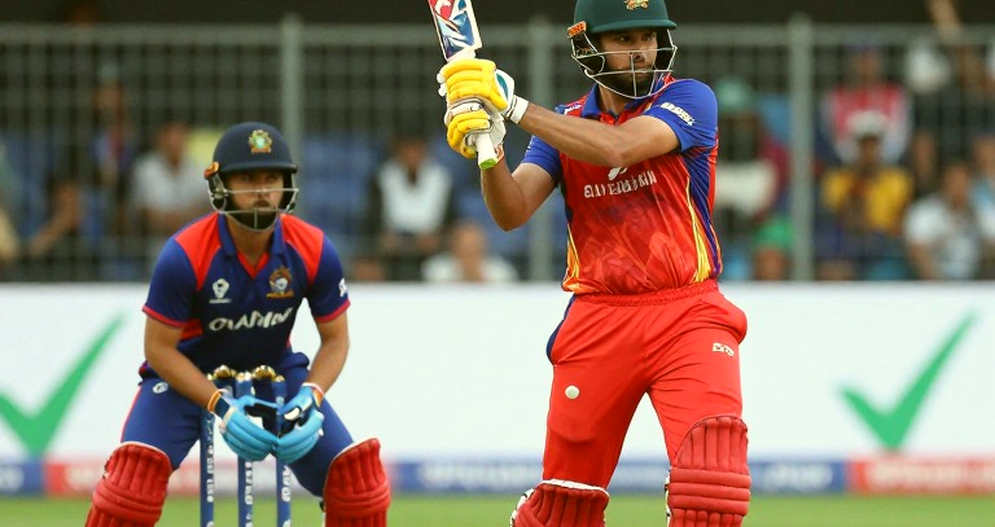
The second frame is quieter. A 99-run innings containing five fours — twenty runs. The other seventy-nine came from running and from moving fielders. In Test cricket an opener's boundary share of total runs usually sits between forty and sixty percent; here it is twenty. Every angle has an agenda, and my job is to cross-examine the pixels — that twenty percent is the day's real story, and the scoreboard does not tell it.
Set the context. This is the first Test of the series, day one of five. Who won the toss, how many overs were bowled, what Bangladesh's bowling attack looks like — none of it is in this source. What is missing is also data: without overs bowled, no reliable run rate can be computed, so the day's tempo has to be discussed with the limits of the arithmetic in view.
Mirpur's familiar character is slow, low, and spin-dominant from day three. Day-one evidence says something else. West Indies' seamers found swing, and the spinners found substantial turn almost immediately. This is not the dry, crumbling third-day surface — it is a fresh, moisture-retaining pitch where the ball is doing something for everyone while it is new.
Sadman's career pattern fits into the same frame. This is his tenth Test fifty, four of them against one opponent. The door to three figures has stayed shut, and the headline here does not call him a century-maker either. Conversion deficit is the one place where his whole career is standing.
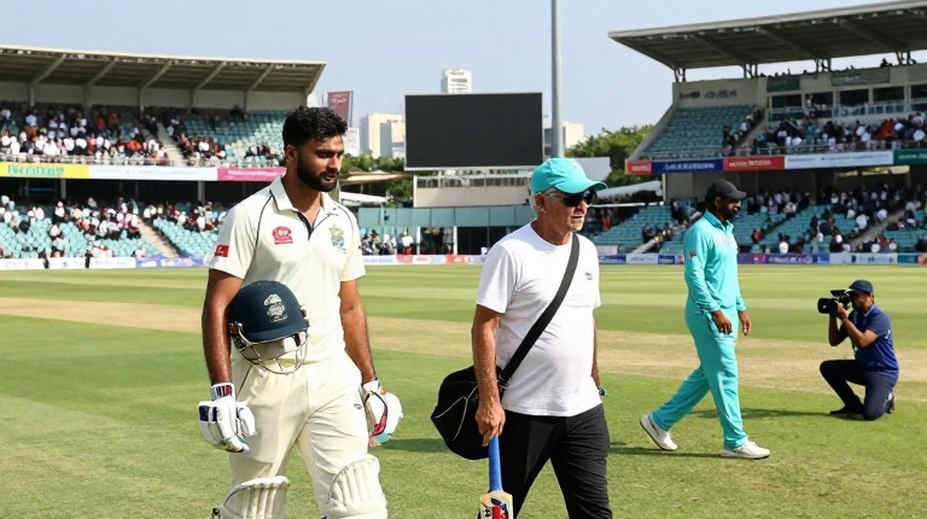
The day's timeline reads like this: first wicket at nine, 96/2 at lunch, a fifty that arrived in the fifth over after the break, then Najmul Hossain Shanto lbw at 110/3, and in the same passage Towhid Hridoy retiring hurt on 42. The decisive forty minutes of the day were those two events, simultaneously.
First analytical angle: a twenty percent boundary share is not a fate, it is a chosen method. 96/2 at lunch implies roughly 3.2 an over in session one — healthy, not aggressive. The innings stands on rotation and hard second runs; Sadman decided to stay in, not to break the bowler.
Second angle: a first wicket at nine and a third at 110 means a 101-run, three-wicket block in between. West Indies' control was intermittent, not sustained. After the early strike they could not build a cluster; they won a session and gave the next one back.
Third angle, and the most valuable: seam movement plus immediate turn on day one compresses the match. First-innings runs gain value, and Bangladesh's usual bat-once-bowl-them-out-twice template shortens. A rule is only a hypothesis until the replay puts it on trial — and the day-one replay says the surface is helping both sides.
Fourth angle, the one nobody wants to point at: the arithmetic does not reconcile. The source calls the 59-run Sadman–Mominul stand the highest of the innings so far. But Bangladesh went from 110/3 to 213/3 with Hridoy contributing 42, so the Sadman–Hridoy stand cannot be smaller than roughly ninety. Either the sentence is internally inconsistent, or the translation lost a passage.
That inconsistency matters more than a typo: the day's largest partnership involved a batter who is now off the field injured.
Fifth angle — arithmetic reconstruction. Subtract 99, 42, 28, 16, 10 and 7 from 213 and eleven extras remain. That many on day one usually means either loose bowling or a hard keeping session with a swinging, turning ball. Caution is required here: individual figures are in the source but the exact innings order is not always clear, so this is a medium-confidence read.
Sixth angle — light. Two stoppages at a ground with floodlights mean murk and cloud, which also explains the seam movement. The two breaks probably cost twelve to twenty overs — an estimate, because total overs are not reported. In a slow, low-risk Test, lost overs are the main structural route to a draw. The light is not a footnote; it is the day's biggest result-modifier.
Seventh angle — Sadman's window. The second new ball becomes available at 80 overs; with 213 on a slow surface and interruptions, reaching eighty overs by stumps is unlikely. So on the second morning he faces a soft, older ball — the least favourable condition for the West Indies seamers and the most favourable for converting 99 into three figures.
One borrowed metric can help, provided the conditions are respected. Tennis break-point conversion comes from a sport of repeated discrete chances; cricket's chances arrive irregularly, and the quality of each chance shifts with pitch, new ball, light and fatigue. The tennis number cannot be imported whole — what can be measured is not how many chances, but where they occur.
Now the other side. The television panel will call this Bangladesh's day. The rewind says otherwise: 213/3 is a platform standing on three legs — one set batter, one lower-order dependence, and one injured number four. The day belongs to neither side, but the process leans slightly Bangladesh's way — and that lean rests on one pair of shoulders.
Something more uncomfortable: early turn on day one is not unambiguously good news for the hosts. The pitch will open for both spinners; if Bangladesh fail to post a big first innings, the advantage drifts toward the extra seamer in the opposition attack, whose composition this report does not give. Based on my years of watching matches, prediction on incomplete data is the biggest mistake available.
Still, I keep one frame of awe. An opener, a fifty off 95 balls, five fours, unbeaten on 99. In a T20 era that is rare patience, and its reward is still unknown. That part which resists explanation is exactly what brings me back to the screen.
Looking forward, three things matter. The first hour of day two — not whether Sadman reaches a century, but whether he can keep scoring without a new ball. Second, the true extent of Hridoy's injury, because it decides both batting depth and bowling balance, neither of which this report supplies. Third, reporting standards: overs bowled, the toss, and light-meter decisions in the public record would give readers not just a story but a calculation. Silence is sometimes evidence and sometimes a gap — the difference takes one rewind.