
HomeAsian CricketShami's Red-Ball Farewell: The Quiet Poetry of Seam and the End of an Era in India's Test Bowling
Asian Cricket
Shami's Red-Ball Farewell: The Quiet Poetry of Seam and the End of an Era in India's Test Bowling
মোহাম্মদ শামি ১৩ বছরের টেস্ট ক্যারিয়ারে ৬৪ ম্যাচ খেলেছেন। ঘরের মাঠে ৭৬ উইকেট ২২.০০ Averageে, অস্ট্রেলিয়া ও দক্ষিণ আফ্রিকায় ১৬ টেস্টে ৬৬ উইকেট ২৭.৪২ Averageে। তাঁর প্রধান শক্তি ছিল ১৩৫ কিলোমিটার প্রতি ঘণ্টার বেশি গতি, সিম নিয়ন্ত্রণ, রিভার্স সুইং এবং পুরোনো বলে উইকেট তোলার ক্ষমতা। ২০১৮ ওয়ান্ডারার্সে ৫/২৮ ছিলেন ক্যারিয়ারের অন্যতম স্মরণীয় স্পেল। হাঁটুর Injury ও অস্ত্রোপচারের পরও তিনি More পরিপক্ব বোলার হিসেবে ফিরেছিলেন। ২০২৩ বিশ্ব টেস্ট চ্যাম্পিয়নশিপ ফাইনাল ছিল তাঁর শেষ টেস্ট। অবসরটি ভারতের পুরোনো বলের বিশেষজ্ঞ ও অভিজ্ঞ পেস বোলারের ঘাটতি তৈরি করবে, তবে তাঁর কারিগরি উত্তরাধিকার ভবিষ্যৎ ফাস্ট বোলারদের জন্য পাঠ হয়ে থাকবে।
Mohammed Shami's retirement from Test cricket is not merely a formal announcement. It marks the departure of a fast bowler who, across 13 years and 64 Tests, gave India a rare combination of pace, seam control, reverse swing and patience. His record at home produced 76 wickets at an average of 22.00 and a strike rate of 42.6. In Australia and South Africa, he took 66 wickets in 16 Tests at 27.42 and a strike rate of 49.1. Those figures show that he was not only a new-ball operator; his greatest value came when the ball was older and the pitch had lost its early help.
The timing of his retirement carries symbolic weight. He stepped away from Test cricket after playing a domestic match for Bengal. His connection with Eden Gardens runs deeper than venue and city. A bowler who emerged from Kolkata club cricket and became an international star gave that ground an emotional place in his story. The 2026 World Test Championship final against Australia was his last Test. His retirement therefore represents more than a squad change; it is the loss of a particular set of bowling skills.
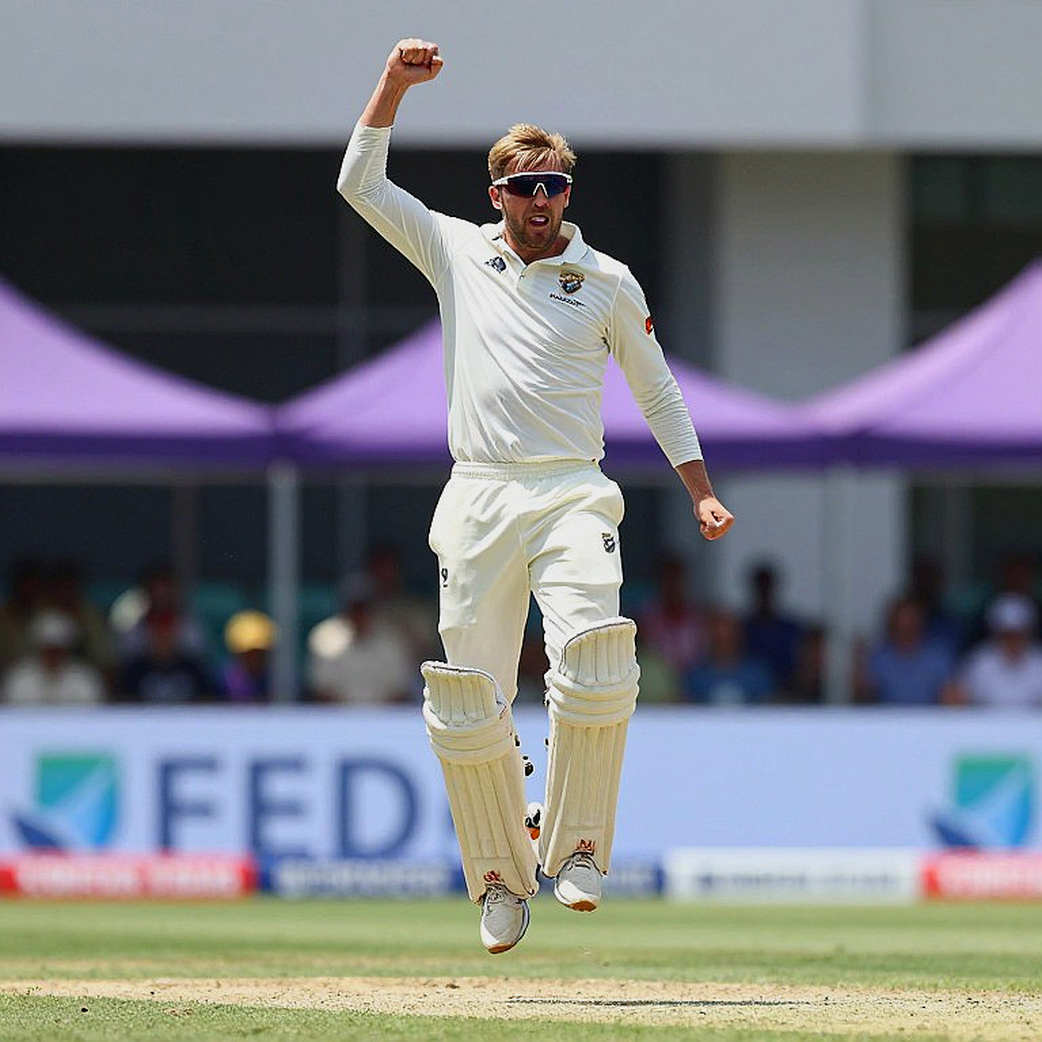
Shami's bowling was built on repeatable technical precision. His run-up was measured, his delivery stride balanced, his jump controlled and his wrist position precise at release. Wasim Akram once observed that Shami's seam appeared to kiss the pitch rather than strike it. The line is poetic, but it contains a technical truth. When the seam lands at the right angle, even a small deviation can trouble the batter. Shami could produce that deviation repeatedly, even on surfaces that offered little assistance.
He did not have the imposing height often associated with elite fast bowlers. His strength lay elsewhere. His pace rarely dropped below 135 kph, and that speed combined with seam movement made it difficult for batters to commit to front-foot strokes. His cutters, bouncers and fuller lengths were used with purpose. The difficult club pitches of Kolkata encouraged him to develop a wider repertoire instead of depending on natural pitch help. That early experience helped him become more than a conventional new-ball specialist.
The 2026 Wanderers Test provides a defining example. In one crucial spell he took 4 wickets for 10 runs in 3.3 overs and finished with 5/28. India completed a 63-run turnaround victory. The spell shows how one bowler can change the direction of a Test. Shami did not merely take wickets; he created uncertainty, built pressure and produced breakthroughs when the match was balanced.
His contribution in Australia was also significant. During India's successful 2026-19 tour, he took 16 wickets at 26.18. Jasprit Bumrah took 21 wickets at approximately 17. The two figures illustrate the value of complementary fast bowling. Bumrah brought a different action, angle and style of pressure. Shami brought seam movement, reverse swing and older-ball expertise. Together they gave India a pace attack capable of competing in Australia and South Africa.
Injury was a constant part of his story. Recurring knee problems limited his availability, and surgery once kept him out for around 16 months. Many fast bowlers struggle to regain pace and confidence after such a break. Shami returned not only fitter but seemingly quicker and more tactically mature. He developed a better understanding of how to construct a Test innings and when to use different deliveries. That evolution turned him from a talented bowler into a complete one.
For India, his retirement creates a succession question. Shami and Bumrah formed a strong partnership. Replacing Shami requires more than finding another fast bowler. India need someone who remains dangerous after the new ball, who can control the seam, use reverse swing and sustain pressure through long innings. That skill set is difficult to reproduce. Workload management, domestic development and overseas exposure will become more important.
From a commercial perspective, the supplied material provides no evidence of auction values, franchise contracts or broadcast-rights effects. Shami's legacy is primarily sporting and cultural. His value lies in his Test performances, his technical influence and his contribution to India's bowling identity. His career also challenges the tendency to judge fast bowlers only by speed, height or headline presence. He was not always the main attraction, but he was often essential to the team.
Governance and administration are not central to the story. The retirement appears to be a sporting decision shaped by the demands of a long career and recurring injury. His knee problems raise broader questions about fast-bowler workload management. Fast bowling places enormous stress on the body, and individualized recovery plans are essential. His career also highlights the importance of domestic cricket. From Sahaspur to Kolkata, from club cricket to Bengal and then India, his pathway shows how regional cricket can produce international talent.
The main risks after his retirement are sporting. India lose a proven older-ball wicket-taker, an experienced overseas campaigner and a bowler who could share the workload with other senior fast bowlers. The injury history also shows how fragile a pace attack can be when it depends on a small number of experienced players. The challenge is not simply to replace raw pace but to replace a specific combination of seam control, reverse swing and tactical intelligence.
Shami's public story is one of quiet excellence. He was not the most forceful personality or the most discussed name, but his contribution often proved decisive. His partnership with Bumrah symbolized that balance. His connection with Eden Gardens and Kolkata club cricket gives his retirement an emotional dimension. For broadcasters and coaches, his career offers valuable material: seam position, wrist control, older-ball movement and the patience required to build pressure in Test cricket.
Overall, Shami's Test retirement marks the end of a distinctive fast-bowling chapter. He proved that precision, adaptability and consistency can be as valuable as physical intimidation. His legacy will be measured not only in wickets but in the way he made the ball talk. Test cricket was richer for every note.
Related Players
Recommended
The Empty Ledger Is the Most Honest Verdict: Data, Referees and the Politics of Decimals in Cricket2026-10-10
Asian Cricket's Quiet Crisis: Calendar, Revenue and the Nation-versus-Franchise Tug of War2026-11-01
The Scorecard of Empty Cells: Why Cricket Built Separate Mathematics for Absence2026-10-17
The 2026 Bengaluru Test: Fifty Years On, the Unsettled Debt of the Founding Mothers2026-10-31
Empty Screen, Big Decision: The Invisible Crack in Cricket's Review System2026-10-14
The Empty Cell Was the Biggest Data Point: Eight Layers of a Cricket Data Audit2026-10-16
Dew in Abu Dhabi, Four-Match Arithmetic: Is This Really 2027 World Cup Preparation?2026-10-17